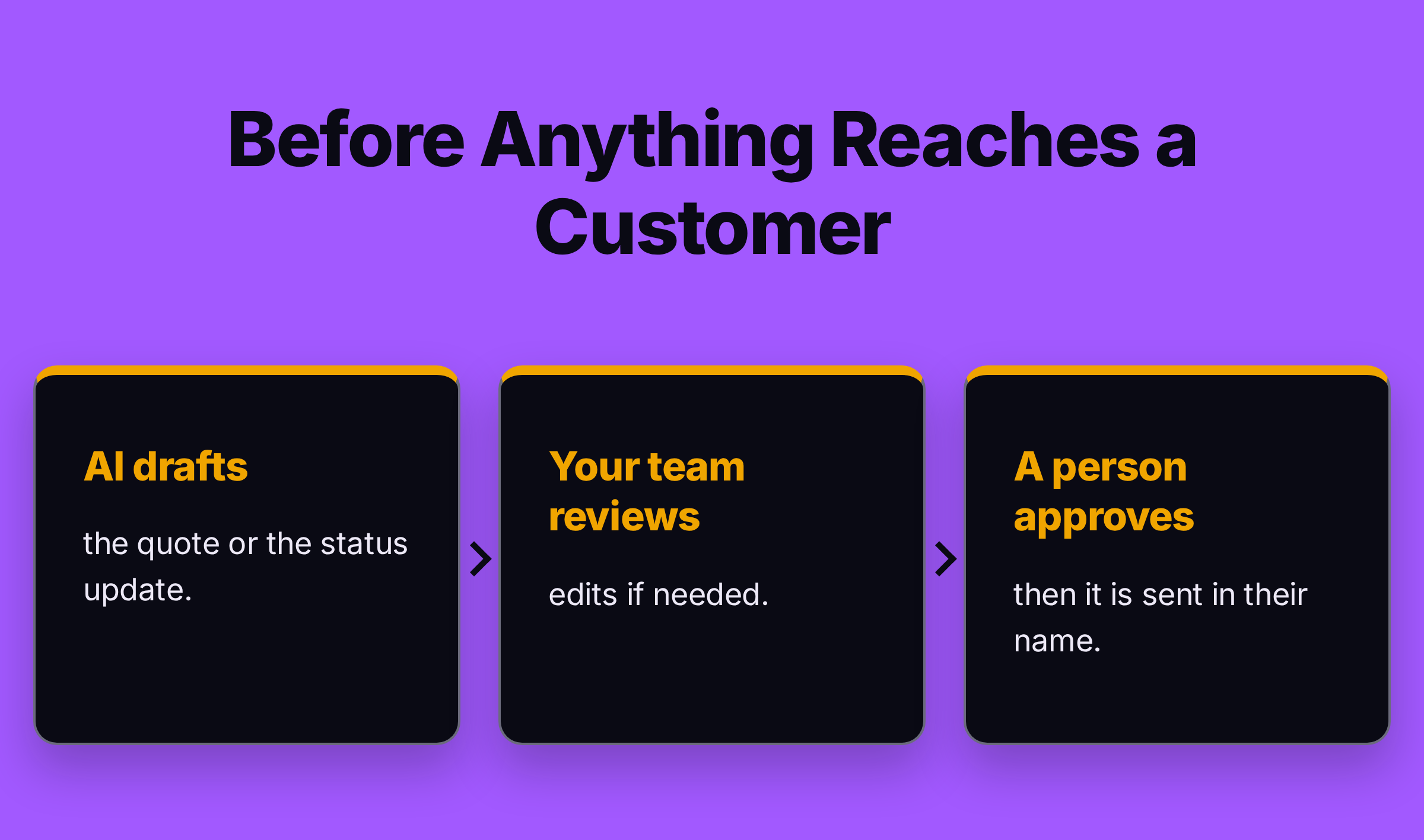

Almost every freight software page says AI. Very few say which part of your week changes. In a forwarding company, the work arrives as messages: an enquiry, an agent's rate reply, a 'where is my cargo?', a carrier bill. This guide explains where AI in freight forwarding does real work today. It is not a list of features. It is a list of tasks that move from a person's desk to software, with a person approving the steps where money or a commitment is involved. Judge any tool by the work it takes off a named person's desk, not by the word on the website. For more, see all FreighAI guides.
The five workflows where AI does real work today
AI is not magic. It is a tool for specific jobs. In a freight forwarder's office, it is most useful for running the repetitive work that lives in email. Here are five workflows where ai for freight forwarding takes specific steps off your team's plate. The FreighAI examples below are from the product this website sells, used to show how a mechanism works in practice. You can learn more about how FreighAI works on its own page.
1. Reading the enquiry and finding what is missing
An enquiry arrives. It might be three lines of email and a packing list. AI reads the message and attachments to pull out the shipment facts: origin, destination, commodity, package count. More importantly, it spots the gaps. An enquiry for an air shipment from Mumbai to London might have a package count but no dimensions. No dimensions means no chargeable weight, which means no price.
Air freight is charged on the greater of actual and volumetric weight, so without dimensions there is no price. The AI's job is not to guess, but to identify the missing piece and draft the question for you.
FreighAI, for example, 'Spots what is missing in an enquiry and drafts the email asking for it.'
The output is a structured shipment record and a ready-to-send email asking for the missing information. A person on your team reviews and sends it. The work moves from data entry and problem-spotting to simple approval.
2. Pricing from your own rate sources
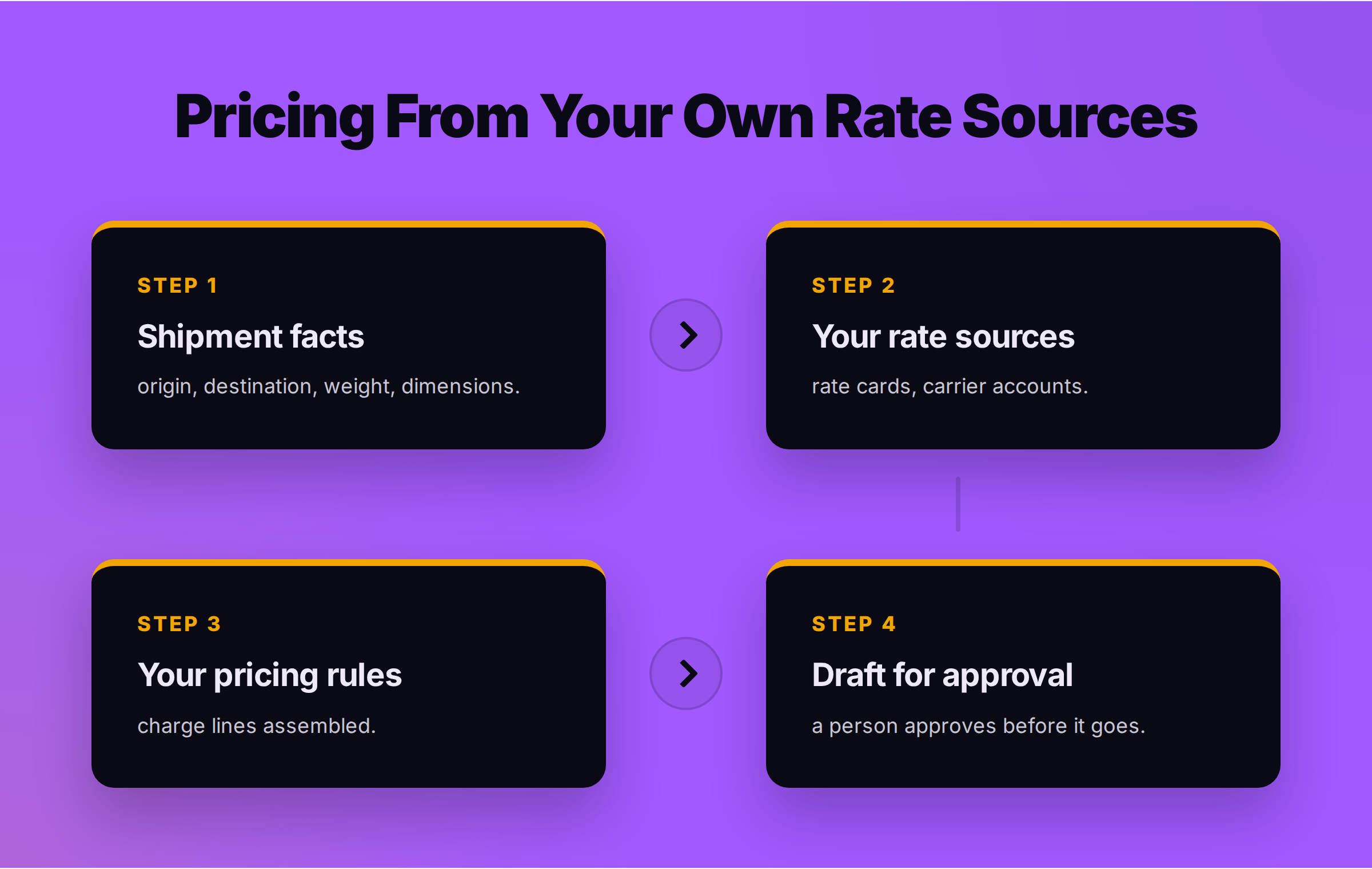
Once you have the complete shipment details, the next step is pricing. An ai freight forwarding software can read your own rate sources. This includes your carrier rate cards, co-loader tariffs, and customer-specific rate sheets you already have. It can also check a carrier account using your own credentials.
The AI combines the shipment facts with your buy rates, sell rules, and margin policies. It assembles the charge lines, from base freight to origin and destination charges. The result is a priced draft, not a sent quote. Your pricing team sees the full draft, including the source for each rate, and approves it before it goes to the customer. Your team keeps control of the final price.
3. Chasing the agents you have to ask
You do not hold rates for every lane yourself. For many shipments, you must ask your overseas agents for buy rates or routing options. This creates a loop of asking, waiting, and chasing. AI can manage this communication.
The software can identify the required lane, select your approved agents for that route, and send a structured request to all of them at once. It tracks who has replied and who has not.
A specific example from FreighAI: 'Emails all your agents for a lane in one go, with the route and charge lines filled in, then chases the ones who do not reply.'
The system controls the asking and the chasing. It does not control the answering. The commercial answer—the rate and availability—still comes from your agent or carrier partner. The work taken off your desk is remembering who to chase and when.
4. Answering 'where is my cargo?'
Routine tracking questions take time, but the answer usually exists already in a carrier's system. An ai powered freight forwarding software can connect the question to the answer.
When a customer asks for a status update, the AI can match the email to the correct shipment. It then reads the latest status from the carrier's system, translates the operational event into plain language, and drafts a reply on the customer's original email thread.
The FreighAI mechanism for this is: 'Answers “where is my cargo?” on the customer’s own thread, from carrier status, for approval.'
Your team sees the draft reply before it sends. This is a critical control point. If the carrier has not scanned the shipment or their system is down, no software knows where it is. In that case, the correct answer is "no new carrier event," and the AI should draft that message for your approval.
5. Matching the carrier bill
When a carrier bill arrives, every line item must be matched to a job and checked against what was agreed. This is a detailed, repetitive task for your accounts team. AI can read the PDF or digital invoice from the carrier. It matches each airway bill or container number back to its job in your system. It then checks each charge line by line against the rate you expected to pay.
The FreighAI process for this is: 'Reads a carrier bill and matches every airway bill back to its job, checking line by line before it is booked.'
The system flags discrepancies: charges that don't match, unexpected fees, or duplicate billings. It prepares the bill for booking in your accounting system but leaves the decision to dispute a charge with a person. Your finance team's work shifts from manual matching to managing exceptions.
One enquiry, from arrival to sent reply
Let's follow one ocean enquiry from start to finish. An email arrives for two 40-foot high cubes, general cargo, from Nhava Sheva in India to Rotterdam, door to port. The weights are to follow.
The ai freight forwarding software reads the email. It immediately spots the missing weights and drafts a reply asking for them. At the same time, it pulls your ocean rate card for the lane and writes to your approved agents in India for the inland leg from the shipper's door.
A quote is drafted. The system pulls the current rate and, for context, places last quarter's price for a similar shipment beside it. A named person in your pricing team gets a notification. They see the draft quote, the original customer email, and the rate sources all in one view. They check the margin and approve the quote. It goes out in their name.
Later, the system notices one of the inland agents has not replied. It sends a follow-up automatically, without anyone on your team having to remember. When the job is won, it lands in the system that owns your records.
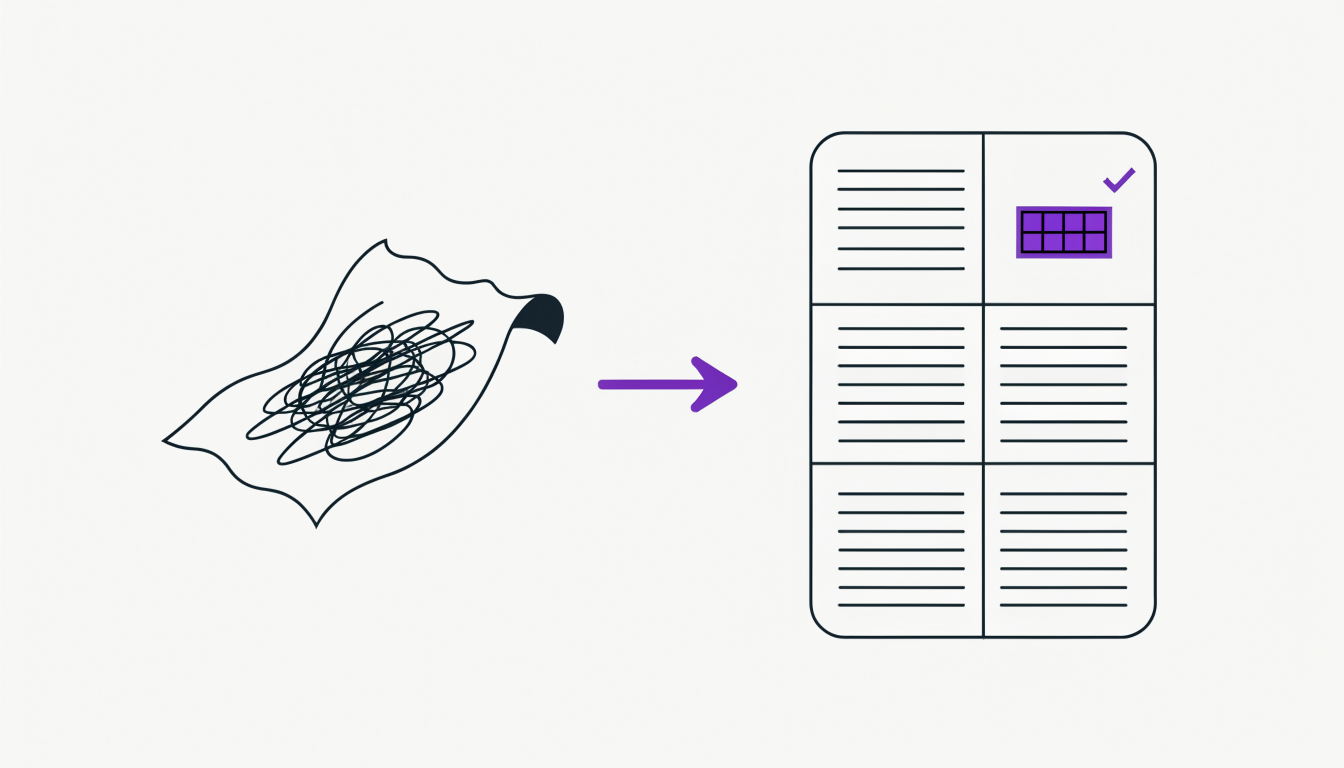
Only one step needs a person: the step where money is committed. The rest of the work—the reading, drafting, and chasing—is handled by the software.
Is AI the same as freight forwarding automation?
No. They are related, but they solve different problems. Understanding the difference helps you choose the right tool.
Rule-based automation
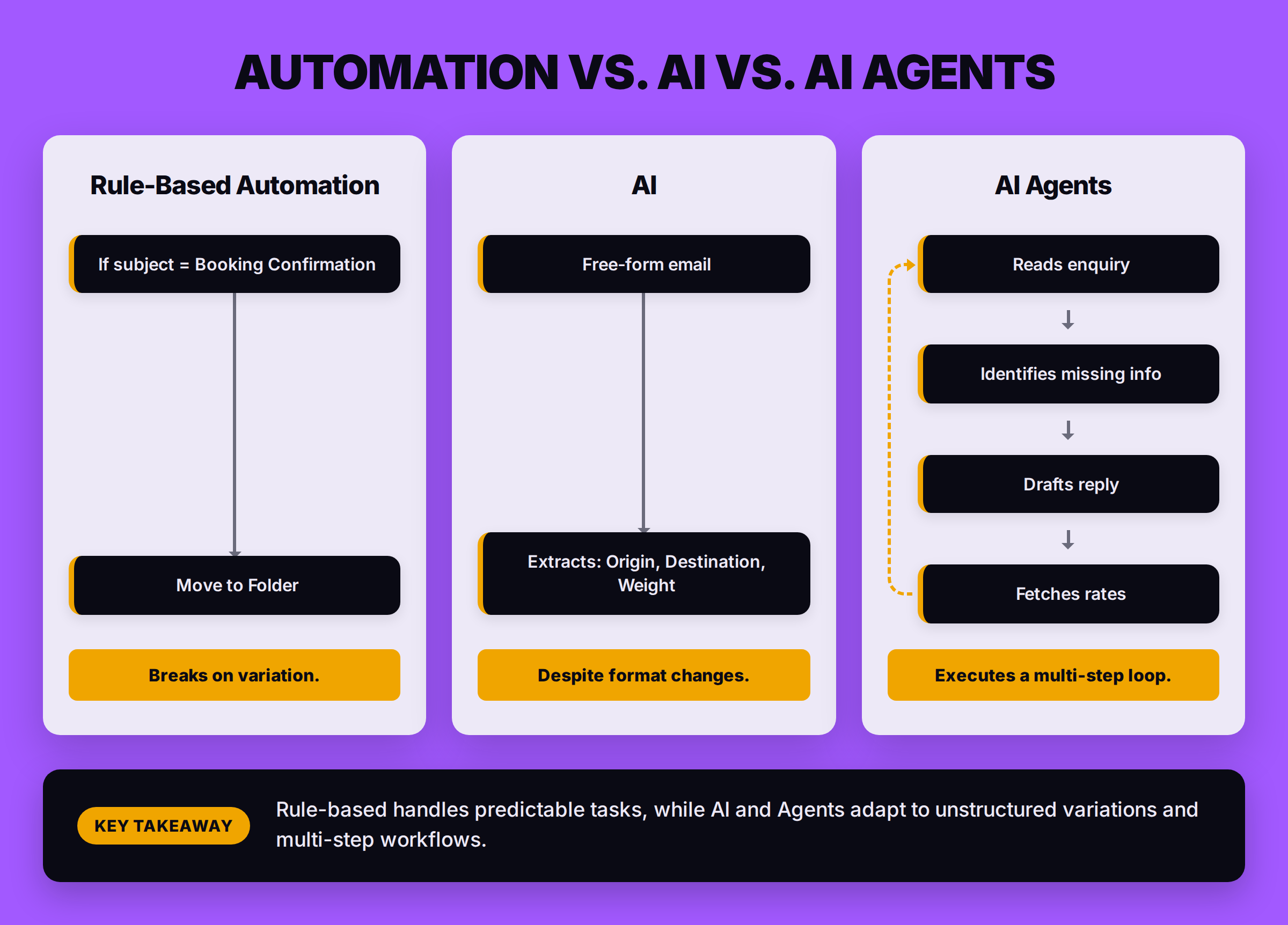
Rule-based automation follows fixed steps you set in advance. It is a series of "if this, then that" commands. For example: if an email subject contains "Booking Confirmation," move it to the "Bookings" folder. It is powerful for predictable, repetitive tasks. It breaks when the input changes shape. If the subject line changes, the rule fails. You can find more detail in the freight forwarding software guide.
Artificial Intelligence (AI)
AI reads messages that do not follow a template. It works out what they mean and what they need. It can read a free-form email from a customer and extract the origin, destination, and weight, even if they are written differently every time. It handles variation.
AI Agents
AI agents go further. They take several steps to complete a task. An agent can read an enquiry, see that information is missing, draft an email to ask for it, and then use the reply to get rates from other systems. They gather context and hand a finished draft to a person. This multi-step process is explained in more detail in what agentic AI actually does and in the FreighAI Academy lessons.
To choose where to start in the back office, see what to automate first. For the bigger change in how a forwarder works, see what a digital freight forwarder is.
What AI does not do
Knowing what ai freight software does not do is as important as knowing what it does. It is an assistant, not a replacement for accountable professionals.
It does not file customs entries
AI can help prepare for a customs filing by extracting data from a commercial invoice. But it does not file the entry. Filing stays with your licensed customs agent, broker, or your dedicated filing system. The legal responsibility for the declaration remains with the authorized party.
It does not keep your statutory books
AI can match invoices and flag discrepancies, which helps your accounts team. It does not, however, keep your official company accounts. Your statutory books must be maintained in a controlled accounting system to meet legal requirements in jurisdictions like India, the UAE, the UK, or the US.
It does not make commercial judgement calls
AI can present options, but it does not make the final business decision. A person must still decide whether to hold a price for a key customer, whether to dispute a charge with a carrier you depend on for space, or how to handle a sensitive service issue. These decisions require commercial judgement, relationship knowledge, and an understanding of risk that software does not have.
It also cannot make an agent or carrier answer faster. It can chase them for you, but it cannot force a reply.
Where AI breaks, and what to ask
A clean demonstration in a sales meeting proves little. Your own messy week proves more. AI systems can break or produce wrong answers when the input is confusing. You need to know how any system handles these cases.
Missing or contradictory information
Ask the vendor what happens when the weights for a shipment never arrive. Does the system stop, or does it guess? A safe system should flag the missing data and wait for a person to intervene.
Mixed currencies and unusual charge lines
Ask what happens when an agent in Dubai quotes in AED for a job you are quoting to a customer in USD. How does the system handle the conversion? Ask where the exchange rate comes from and who can see it.
No carrier scan
Tracking answers depend on the carrier's data. If a carrier has not scanned a container, the AI cannot know its location. Ask the vendor how the system reports this. Does it say "status unknown" or does it offer a prediction? A safe system clearly distinguishes between a confirmed carrier event and an estimate.
Unclear approval
Ask exactly which actions wait for a person. A vague "human in the loop" is not enough. You need to see the specific screen where your team member approves a quote, a booking, or a customer reply before it is sent.
Will AI take over freight forwarding?
The plain answer is no. AI takes over steps, not relationships or judgement. The work that moves to software is the repetitive, administrative part of the job: reading, looking up data, drafting standard messages, and chasing for information. This is the work that currently keeps your operations team buried in their inboxes.
The work that stays with your people is the work that builds your business. This includes pricing judgement, managing customer relationships, negotiating with carriers, and making decisions where money or liability is at stake. Will ai take over freight forwarding as a profession? It is far more likely to change the tools of the trade, allowing skilled forwarders to handle more business without a proportional increase in administrative staff. No one can predict the future, but the current technology is an assistant, not a replacement.
How to test an AI claim in your own office
Any vendor can make a claim. You need a reliable way to test it on your own work.
- Pick one workflow from the five listed above. Start with something specific, like quoting or shipment tracking.
- Take one real week of those messages. Gather all the emails, PDFs, and spreadsheets for that workflow from a typical week. Include the messy ones.
- Ask the vendor to run them live. Have them show you, message by message, what their system does. Watch every step: what it reads, what it drafts, where the approval point is, and what it writes into your system.
A vendor confident in their product should welcome this test. It is the most honest way to see what will actually change for your team. To help structure your evaluation, you can use a framework like the AI impact assessment. For a comparison of different tools on the market, see our guide to the best AI tools for freight forwarders. For a live example of an AI-powered quoting tool, you can see aiquotedesk.com.
If you are ready to see how this works on your own business, you can run one workflow on your own email.